Correction (July 23, 2026): An earlier version of this article gave the 2024 Black graduation cohort as roughly 34,000 students and estimated about 1,800 additional diplomas per year at white graduation rates. The cohort was roughly 30,000 students, and the figure is approximately 1,600 diplomas.
North Carolina's white-Black graduation rate gap was 13.1 percentage points in 2006. A Black student was substantially less likely to graduate than a white one, and the disparity felt entrenched.
Eleven years later, the gap had been cut nearly in half.
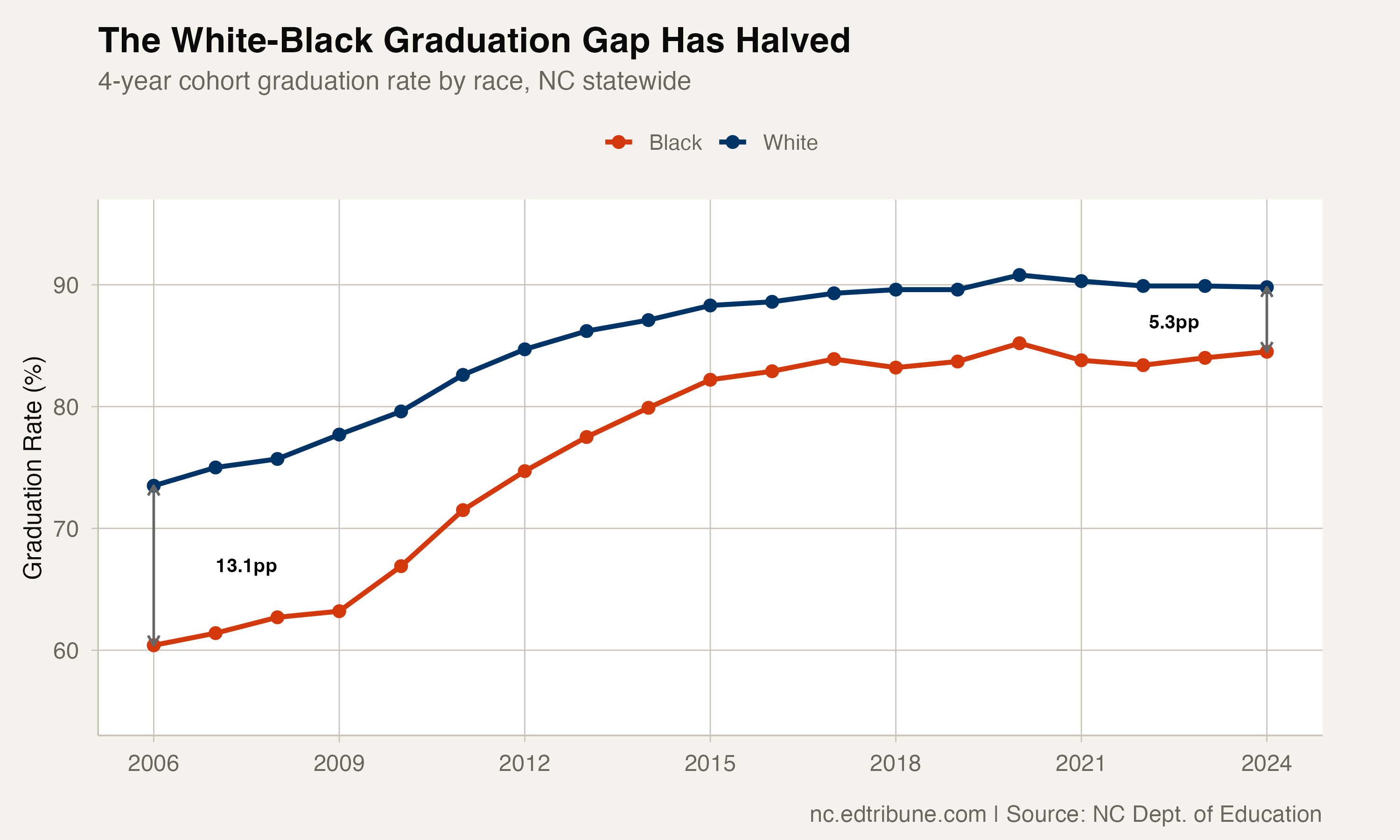
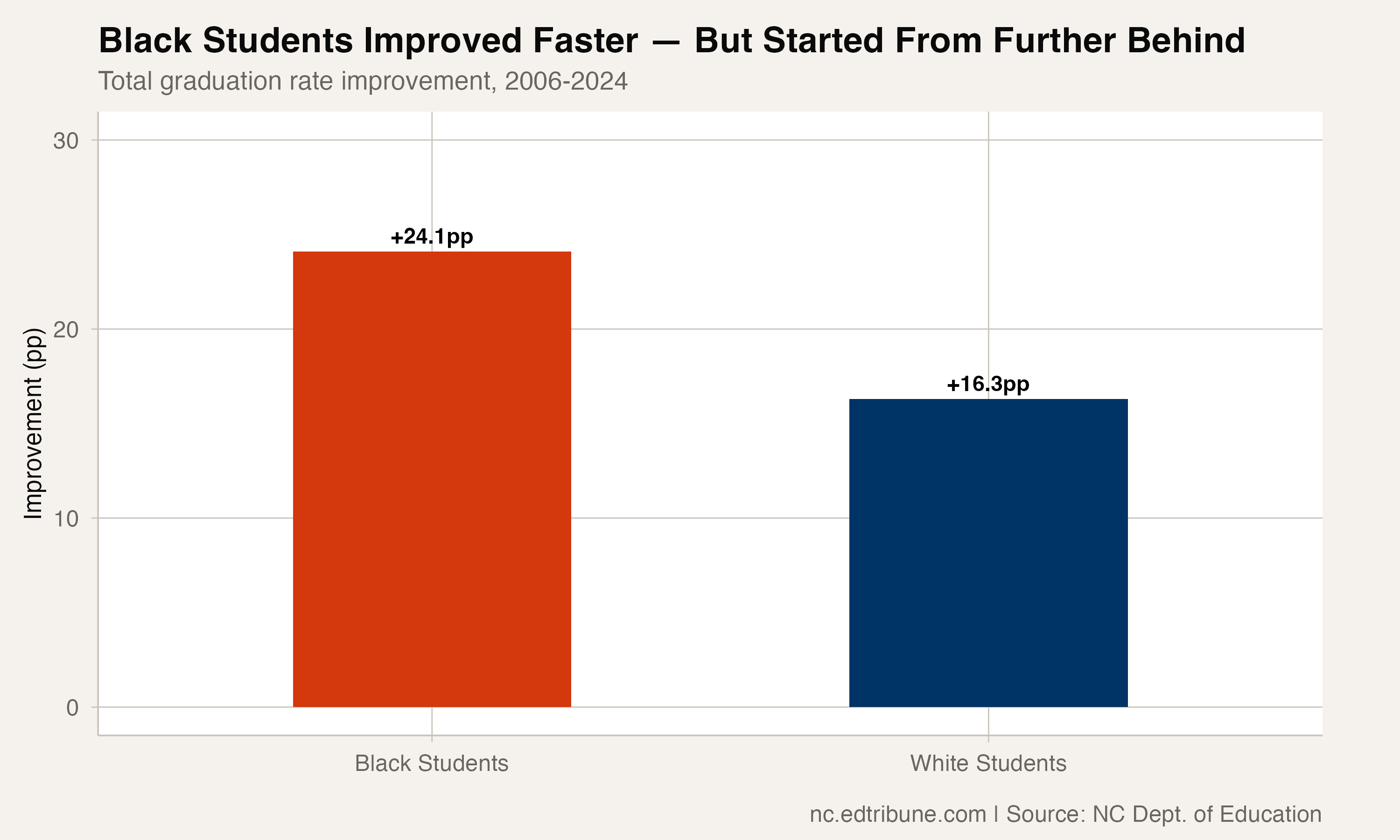
Black students improved from 60.4% to 84.5% — a 24.1 percentage point gain, one of the largest of any subgroup. White students improved too, from 73.5% to 89.8%, but the pace was slower. The convergence was genuine and significant.
Then it stopped.
Seven years of stalling
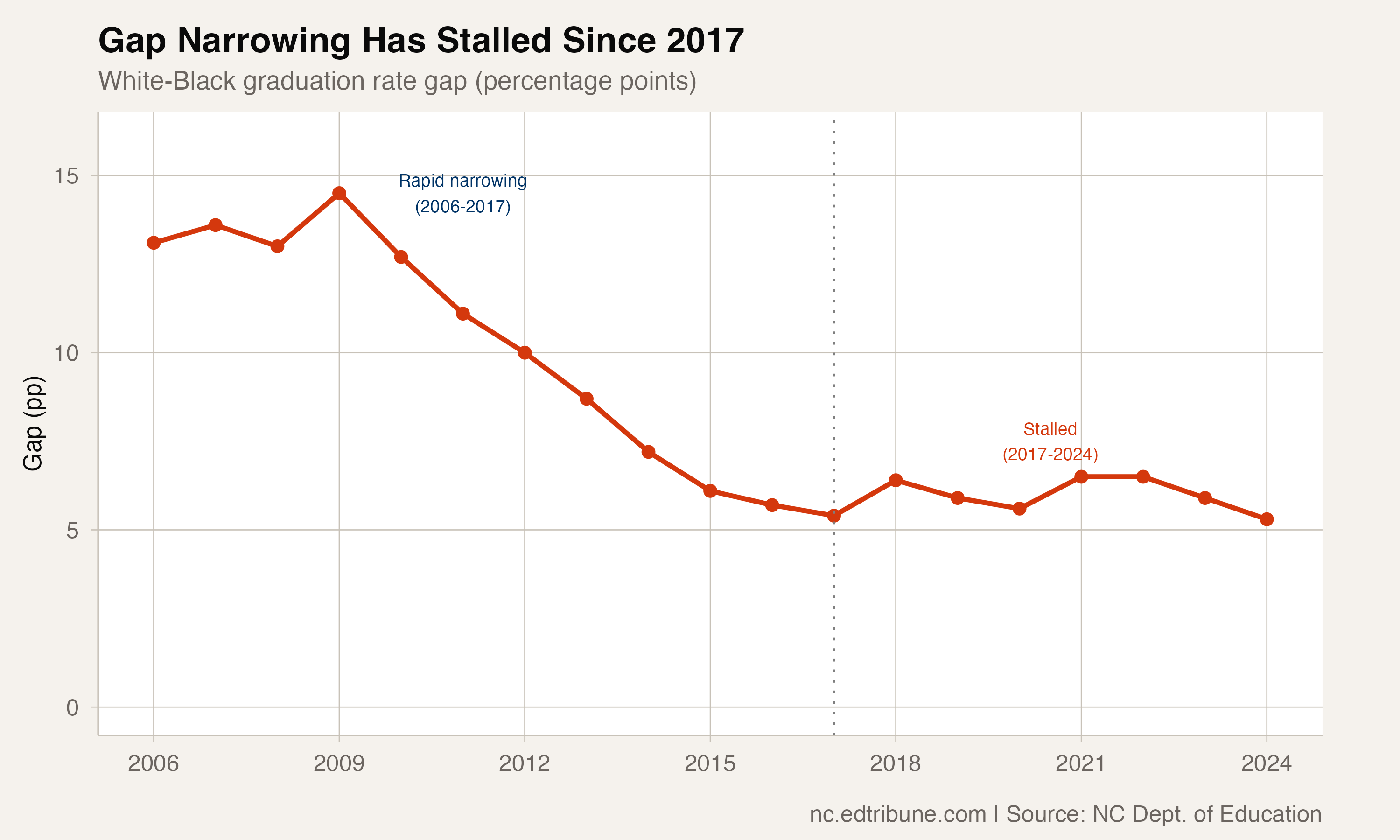
In 2017, the white-Black gap reached 5.4 percentage points. In 2024, it stands at 5.3 points. Seven years of education policy, intervention programs, and spending, and the gap has not budged.
The stall coincides exactly with the state's overall graduation rate plateau. From 2006-2017, both the rate and the gap were improving. Since 2017, neither has moved meaningfully. Whatever forces powered the improvement era have exhausted themselves.
The numbers behind the gap
The 5.3-point gap translates to real students. In 2024, the Black graduation cohort was roughly 30,000 students. At white graduation rates, approximately 1,600 additional Black students per year would receive diplomas.
Those roughly 1,600 students represent lost earnings, limited career options, and reduced civic participation. For a state trying to reach 92% graduation by 2030, they represent the single largest demographic contribution to the remaining gap.
What halving the gap required
The 2006-2017 narrowing happened during a period of broad systemic improvement in North Carolina. The state implemented new graduation pathways, invested in dropout prevention, and raised expectations through accountability systems. These interventions disproportionately benefited Black students because Black students were disproportionately concentrated among those who had been left behind by the previous system.
The problem is that these structural reforms lifted both groups. White students improved from 73.5% to 89.8% — a 16.3-point gain. Black students improved 24.1 points, but the faster pace was mostly catching up from a lower starting point. Once both groups reached the high-80s zone, the remaining barriers became more individualized and harder to address with system-wide policy.
Why the last 5 points are the hardest
Closing a graduation gap from 13 to 5 points involves reaching students who were failed by systemic problems — poor school quality, limited course access, inadequate counseling. Those problems have solutions that scale.
Closing from 5 to 0 involves reaching students whose barriers are more complex — unstable housing, trauma, disability, involvement with the juvenile justice system. These barriers cluster and compound. A student facing two or three of them simultaneously needs a different kind of support than one who simply attended a school with low expectations.
North Carolina's data shows this pattern clearly. The remaining Black non-graduates are concentrated in districts with high poverty, low property tax bases, and limited social services — the eastern and rural districts where every resource challenge compounds.
Detailed code that reproduces the analysis and figures in this article is available exclusively to EdTribune subscribers.
Discussion
Sign in to join the discussion.
Loading comments...