Correction (June 4, 2026): An earlier version summed school rows and double-counted district enrollment and chronic-absence totals. The corrected district-summary rows put the 2024 enrollment at 53,711, the chronic count at 17,263 and the rate at 32.1%. They also place the district second, not first, by rate among the five largest systems.
Correction (July 21, 2026): The previous version said improvement was slowing even though the package shows a 3.8-point decline in 2023 followed by a larger 7.5-point decline in 2024. This version corrects that direction, uses the current package directory name “Forsyth County Schools,” and removes exact-days, student-identity, causal and intervention claims the attendance file cannot verify.
Forsyth County Schools' chronic-absence rate reached 43.4% in 2022, when the package reports 23,681 chronically absent students among 54,571 enrolled. By 2024, the rate had fallen to 32.1%, with 17,263 chronically absent students among 53,711 enrolled. That was an 11.3-point decline from the peak.
The 2024 rate remained 10.5 points above the district's 2019 rate of 21.6%. The district had 11,552 chronically absent students among 53,475 enrolled in that baseline year.
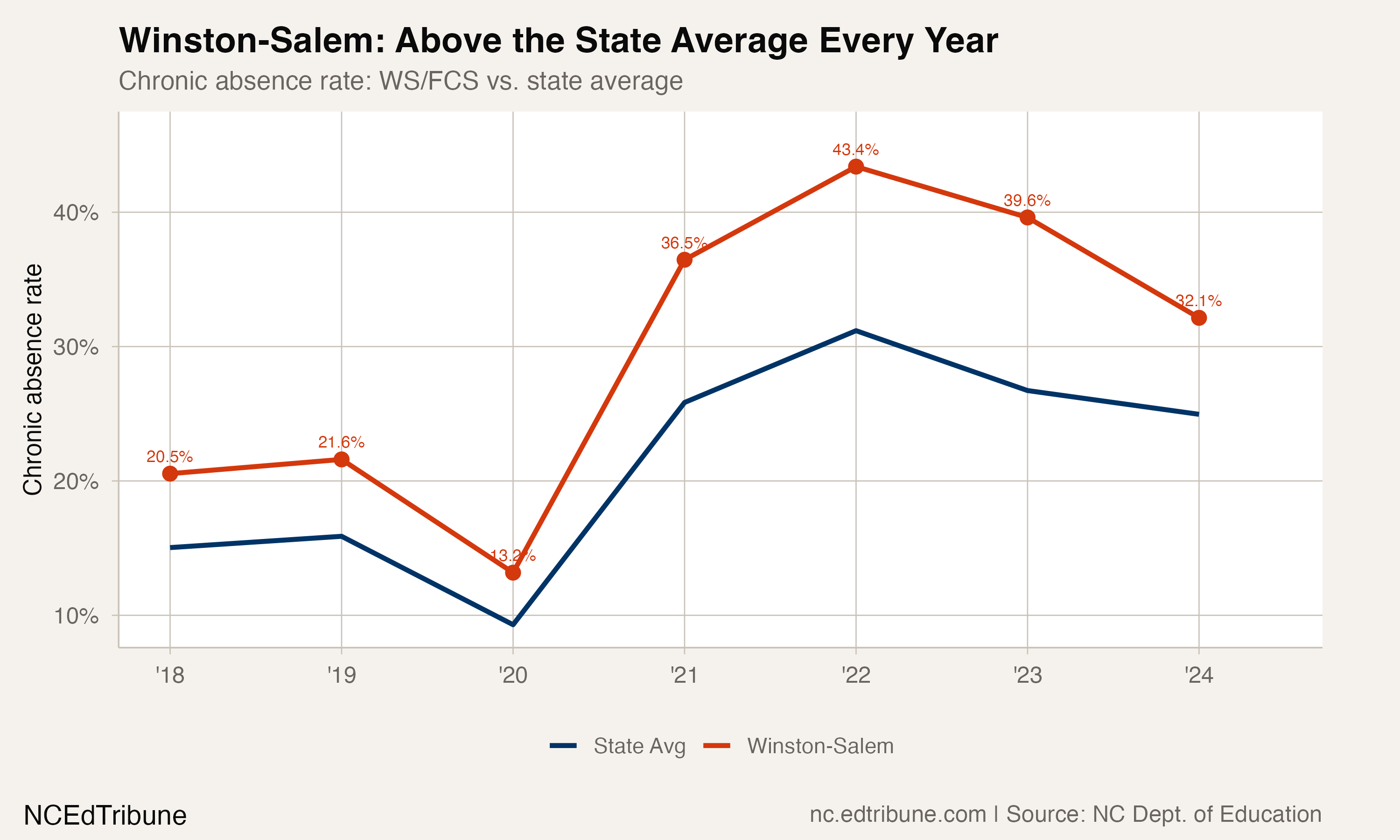
Second-highest rate among the five largest districts
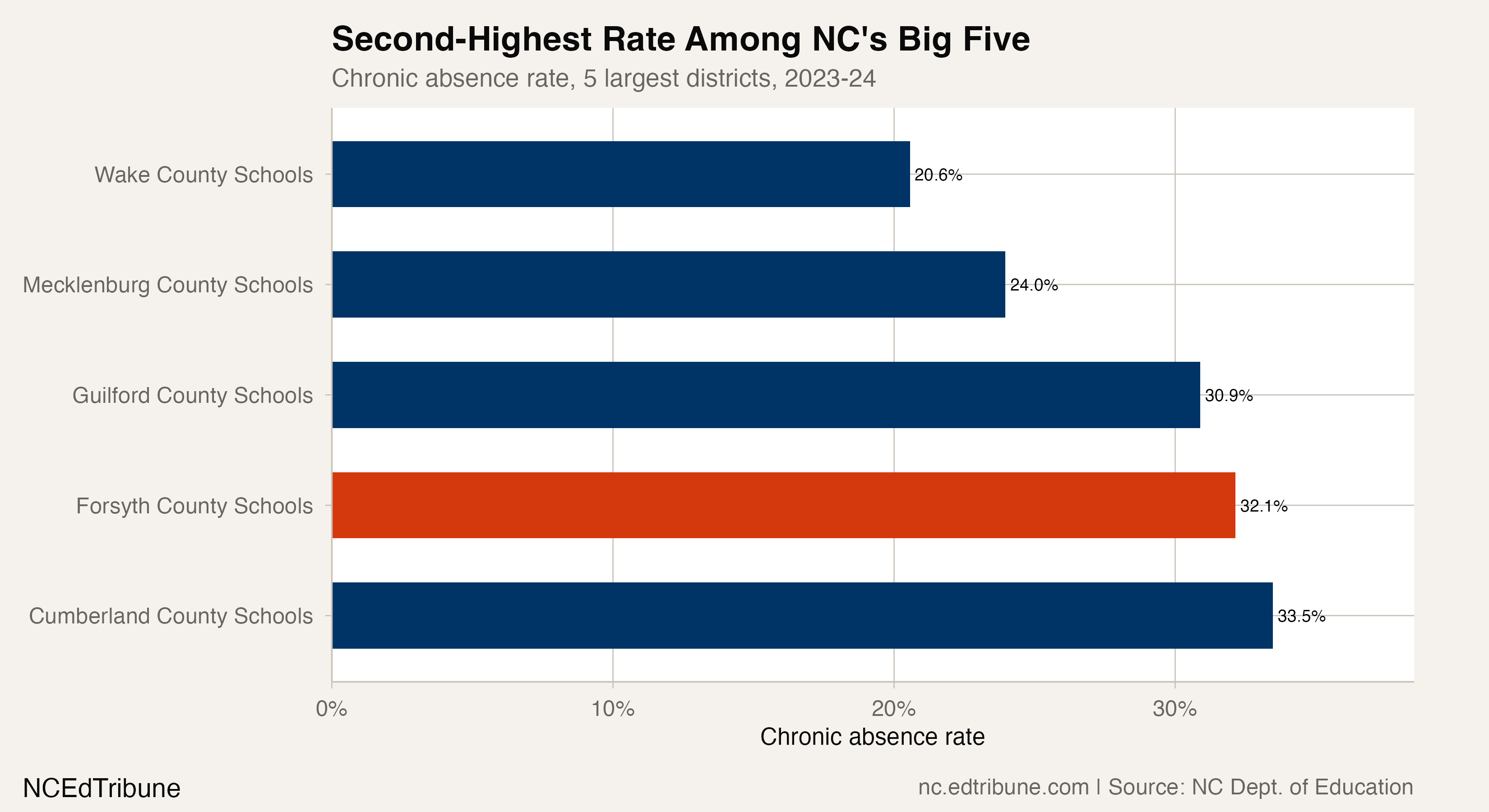
The five largest districts by 2024 enrollment were Wake County Schools, Mecklenburg County Schools, Guilford County Schools, Forsyth County Schools and Cumberland County Schools. Their chronic-absence rates were 20.6%, 24.0%, 30.9%, 32.1% and 33.5%, respectively.
Forsyth therefore had the second-highest rate in that enrollment-defined group, behind Cumberland. Its 2022 peak of 43.4% was 12.2 points above North Carolina's 31.2% statewide peak, which also occurred in 2022.
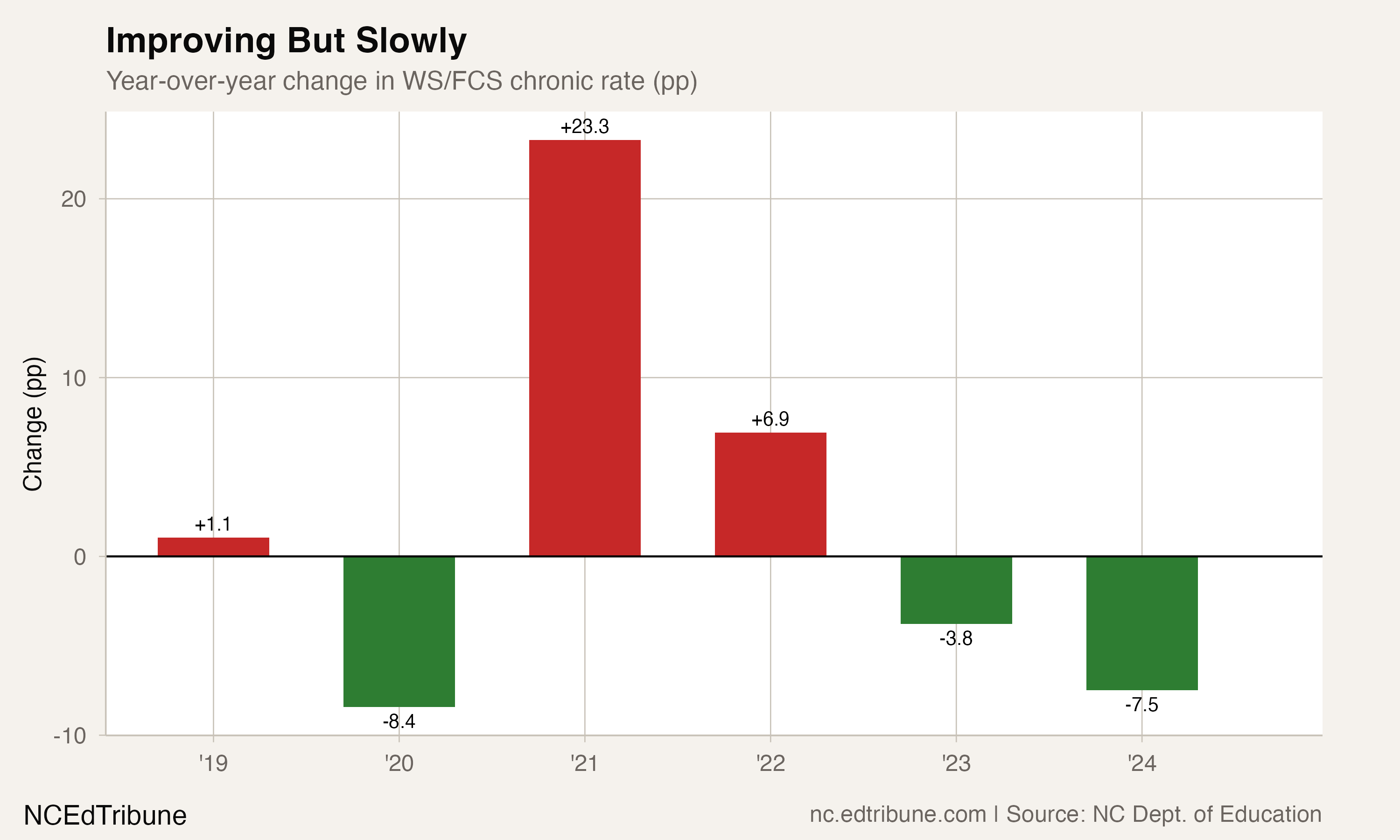
The second annual decline was larger
The Forsyth rate fell 3.8 points from 2022 to 2023, then 7.5 points from 2023 to 2024. The two-year decline was therefore larger in its second year, not slower.
The 2024 chronic count was 5,711 higher than the 2019 count. That is a difference between annual totals, not evidence that the same 5,711 students changed status. The package also does not provide an instructional-day denominator for converting the chronic-absence threshold into one exact number of missed days, nor does it test why the rates changed.
Detailed code that reproduces the analysis and figures in this article is available exclusively to EdTribune subscribers.
Discussion
Sign in to join the discussion.
Loading comments...