Absence
Rural Districts Have the Highest Chronic Absence Rates in NC
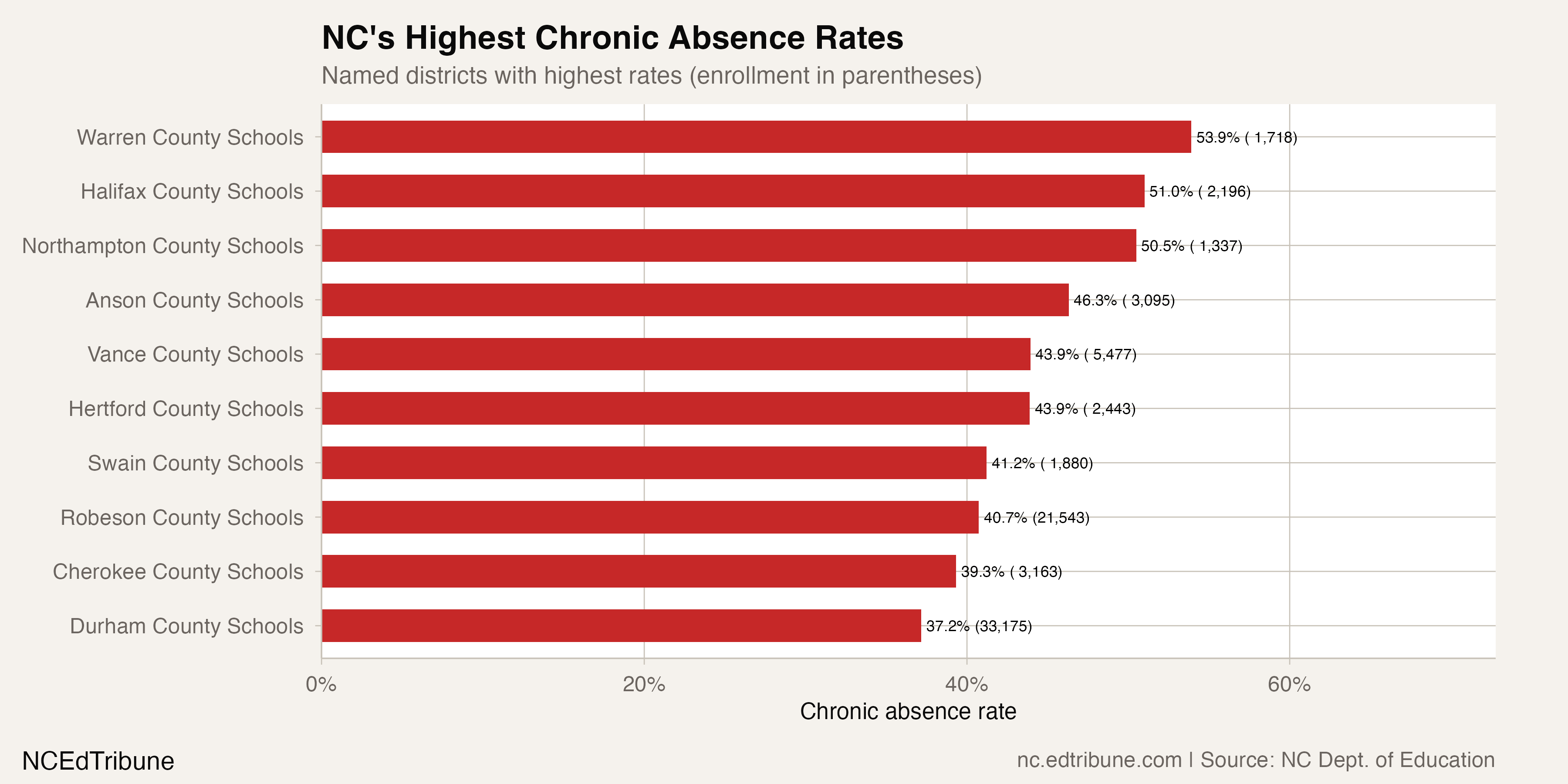
Warren County (53.9%), Halifax (51.0%), and Northampton (50.5%) lead a rural corridor where half of students miss a month or more of school.
Data-Driven Education Journalism for the Tar Heel State
Education News & Data
Local education reporting from every corner of North Carolina, grounded in North Carolina Department of Education data.
Robeson County's chronic absence rate fell 10.3 points from its 2021-22 peak, more than the state's 6.2. At 40.7% in 2023-24, it led NC's large districts.
Native American students had NC's highest chronic absence rate in 2023-24, 40.9%. About half attend Robeson County schools, where the rate was 47.8%.
Gaston County Schools went from a 41.2% peak to 23.6%, a 17.6-point drop and the strongest 2021-to-2024 recovery among NC districts with 25,000 to 40,000 students.
North Carolina's statewide graduation rate was 87.0% in 2024, but 15 districts reached full-series highs and none hit a full-series low.
Warren County (53.9%), Halifax (51.0%), and Northampton (50.5%) lead a rural corridor where half of students miss a month or more of school.
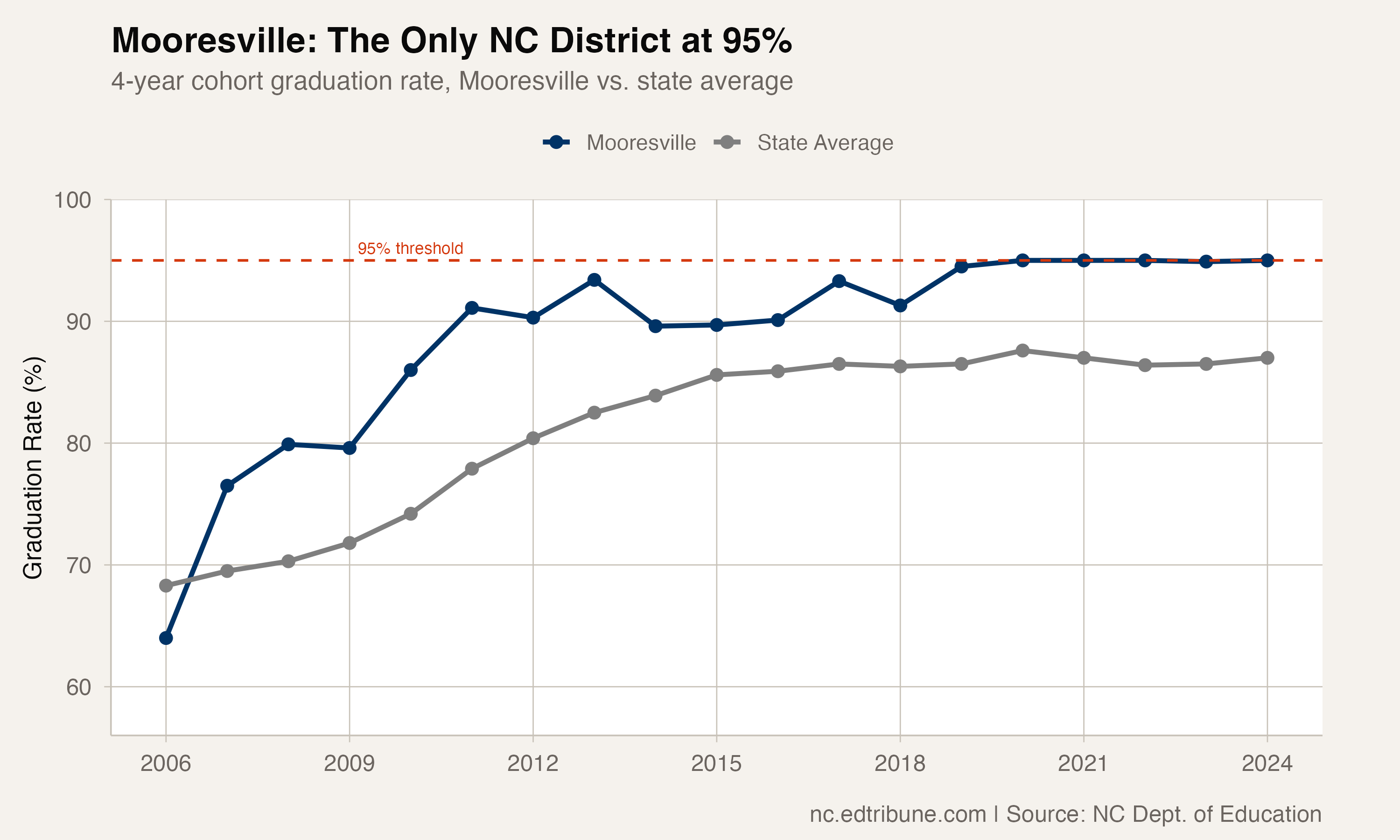
Mooresville Graded School District is the only district in North Carolina in the reported 95% graduation-rate bucket, up from 64% in 2006 and at or above 90% for nine straight years.
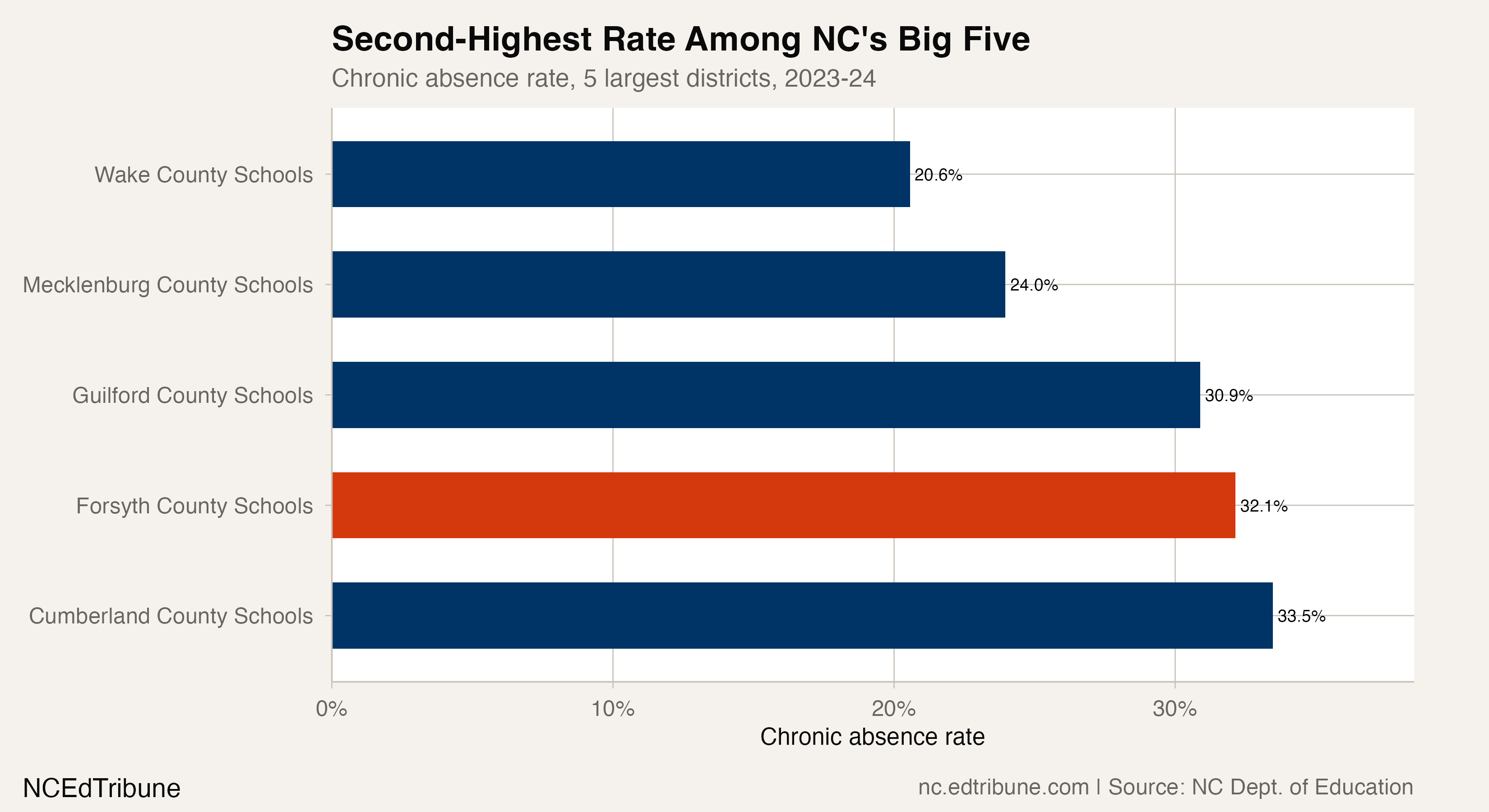
Forsyth County Schools had a 32.1% chronic-absence rate in 2024, second-highest among North Carolina's five largest districts and 10.5 points above 2019.
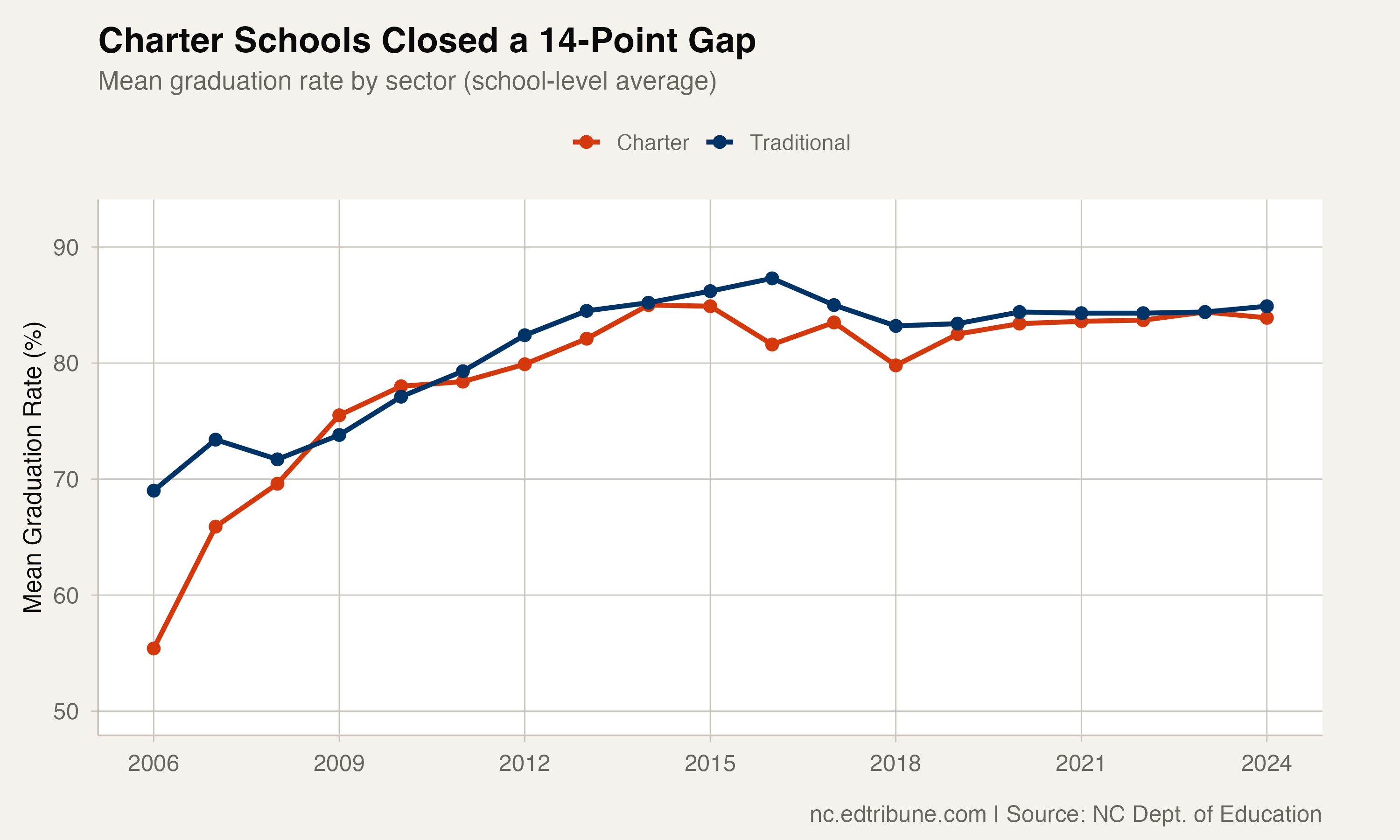
NC charter high schools have closed a 14-point graduation gap with traditional schools since 2006 while quadrupling in number. But convergence masks enormous school-to-school variance.
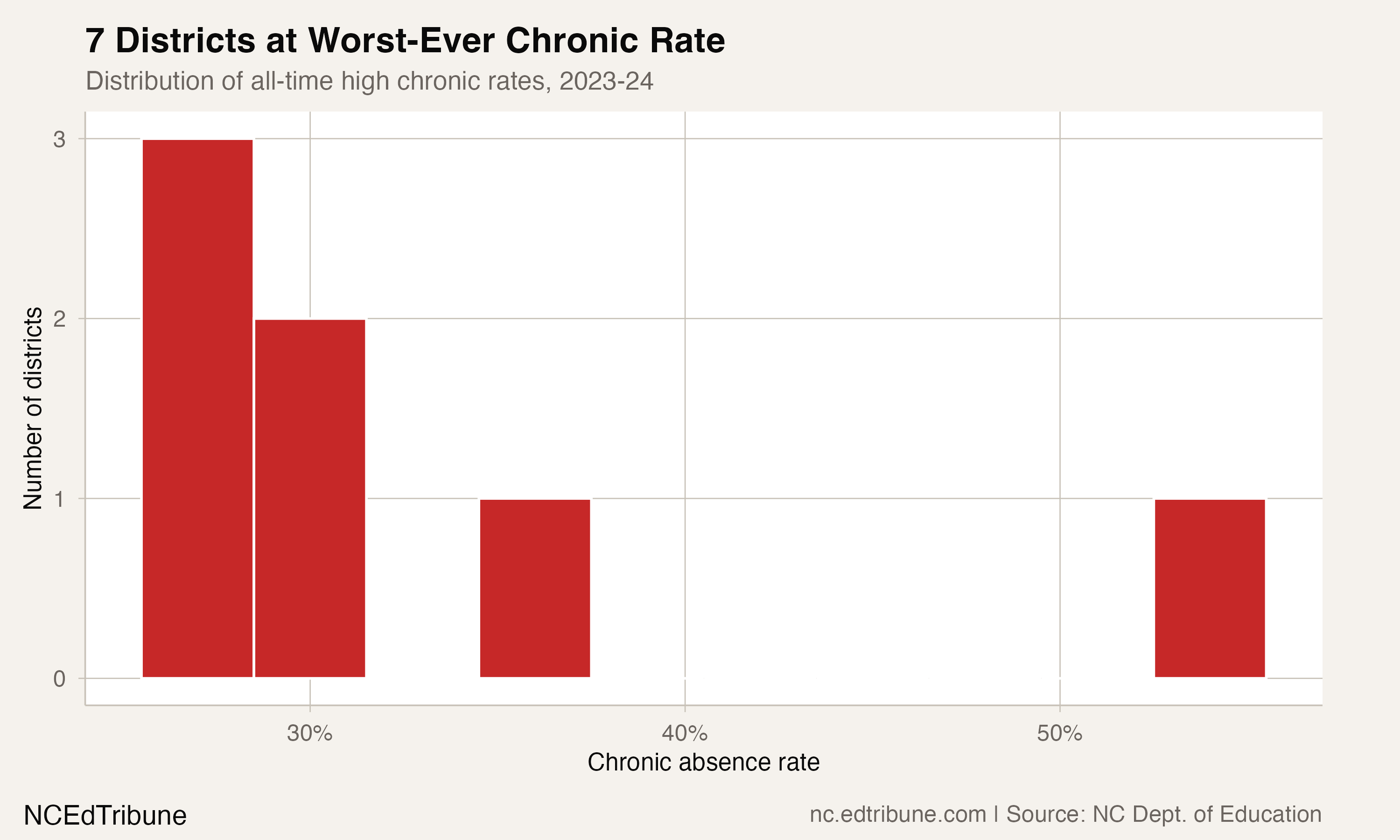
Despite statewide improvement, seven eligible North Carolina districts recorded their highest chronic-absence rate in the package's 2018-2024 panel.
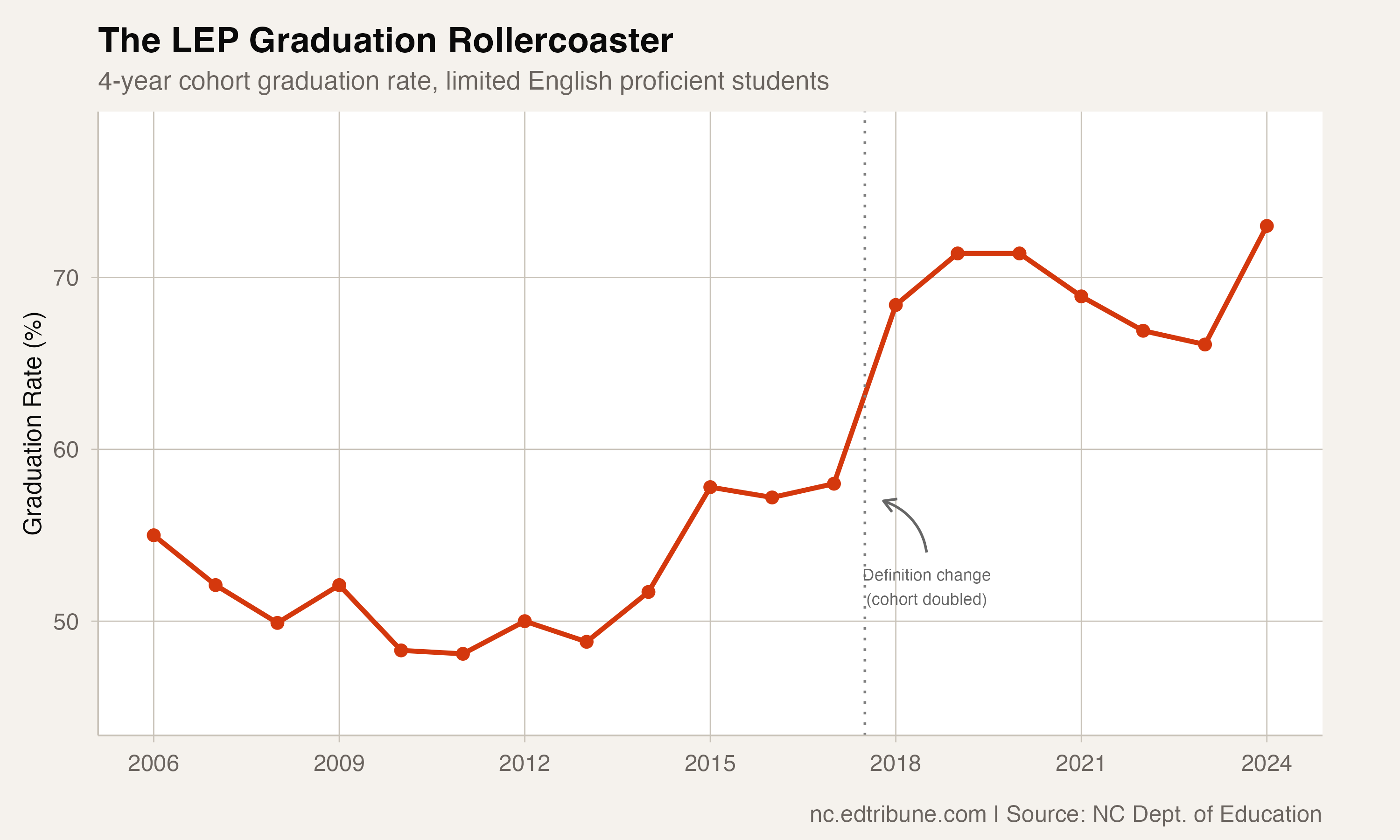
English learners in NC have the most volatile graduation trajectory of any subgroup — spiking, crashing, and spiking again as the cohort more than doubled and the definition changed.
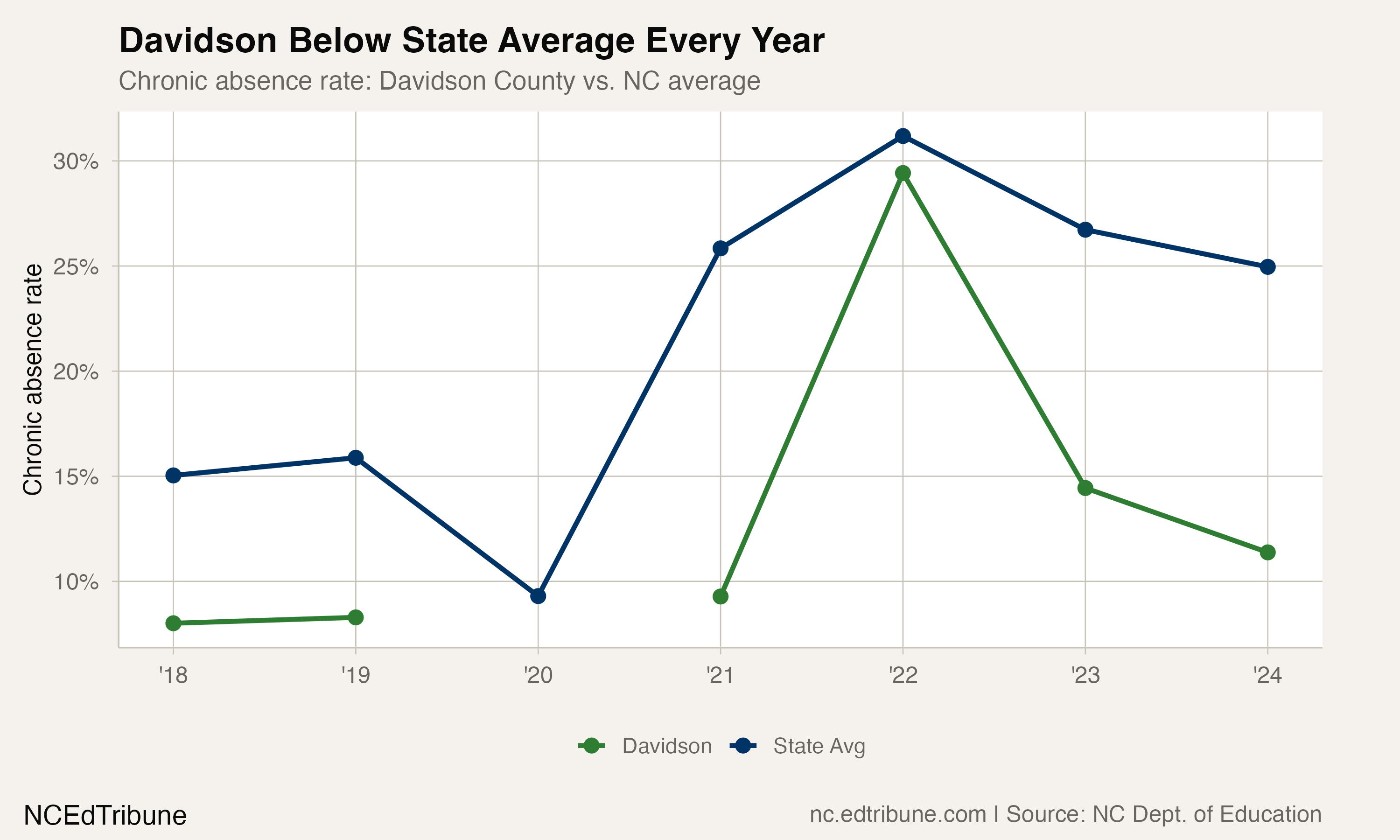
Davidson County Schools dropped from 29.4% to 11.4% chronic absence, the largest North Carolina district to improve this far this fast.
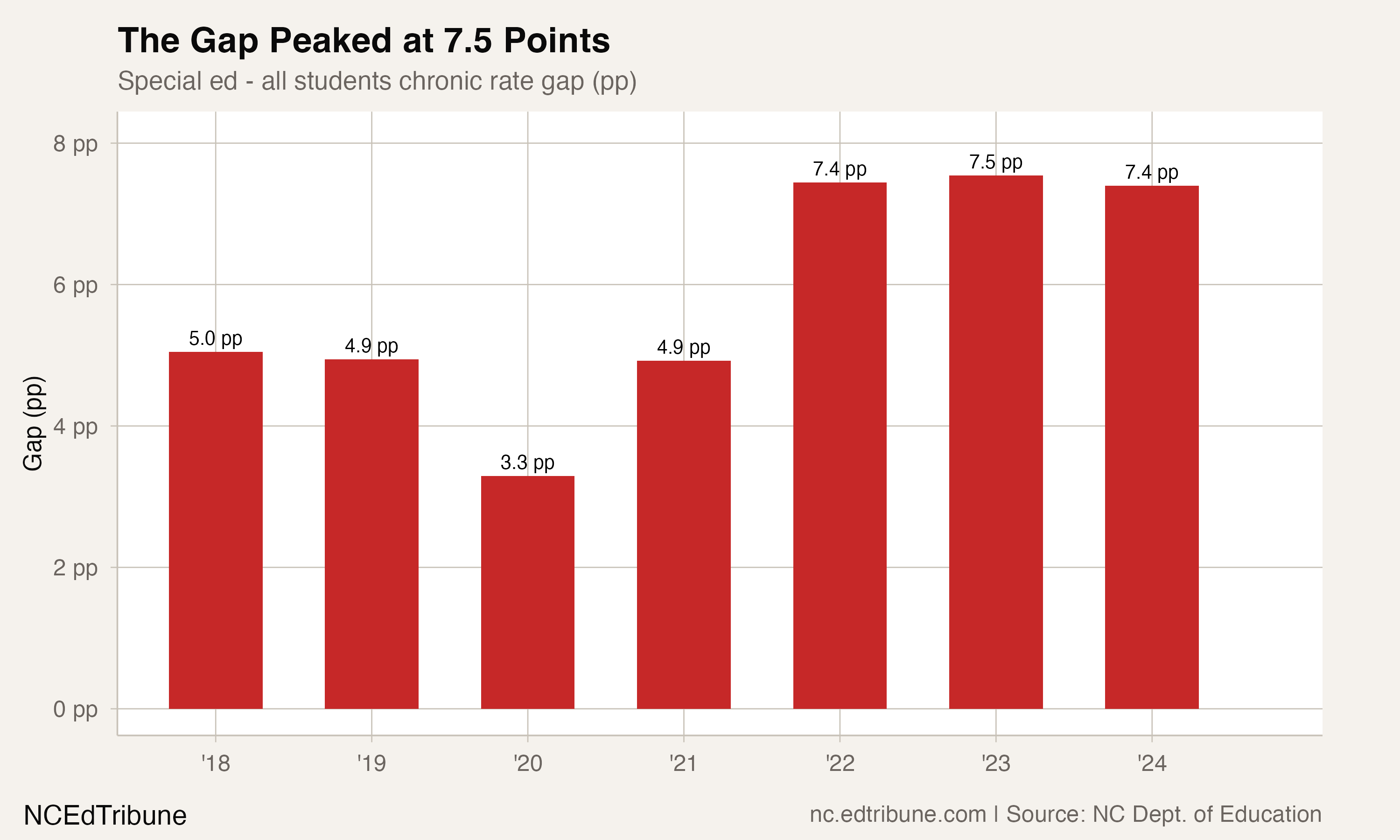
Students with disabilities have a 32.4% chronic absence rate in NC, 7.4 points above the overall average. The gap was roughly 5 points before the pandemic.
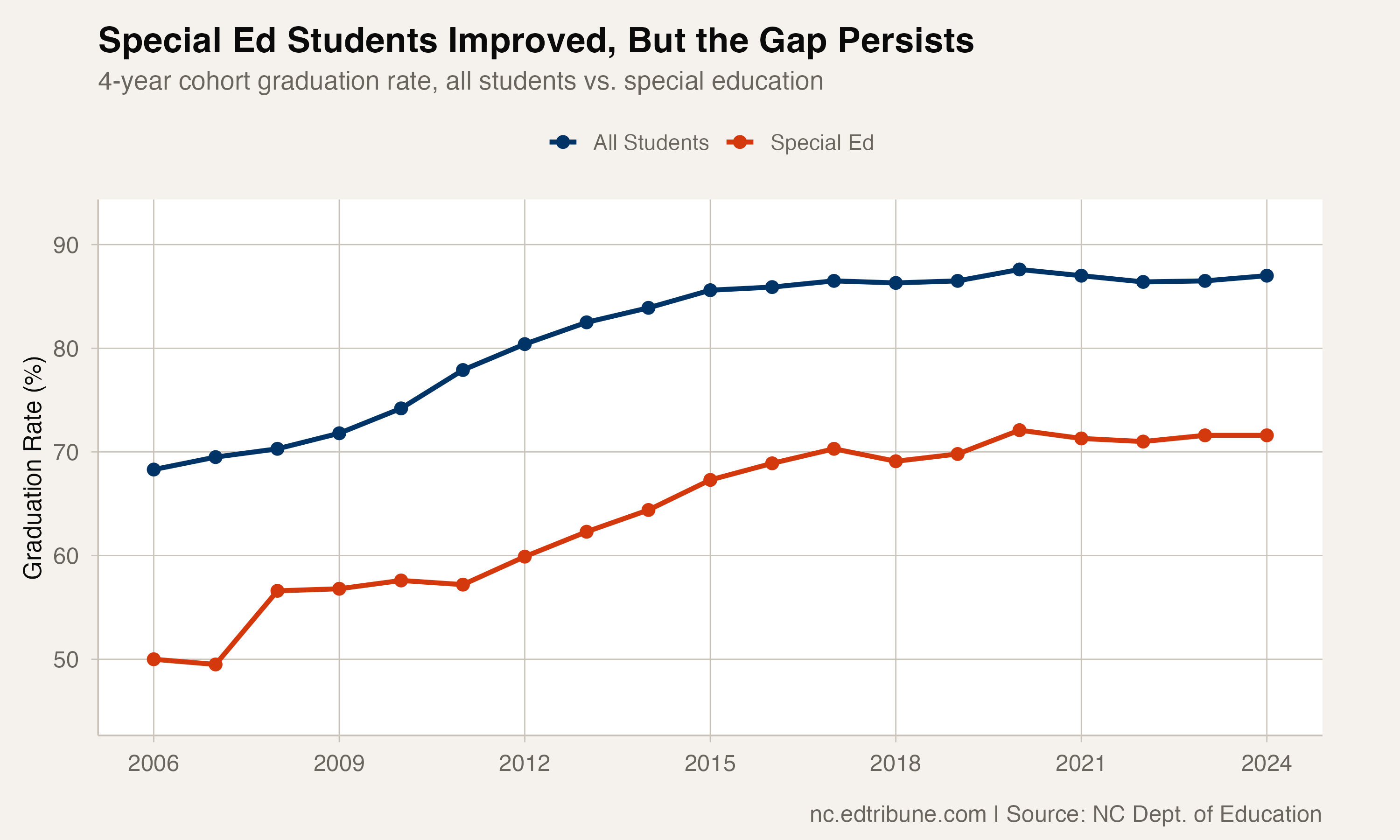
North Carolina students who receive special education services graduate at 71.6%, up nearly 22 points since 2006. But the gap to the state average has held near 15 points.
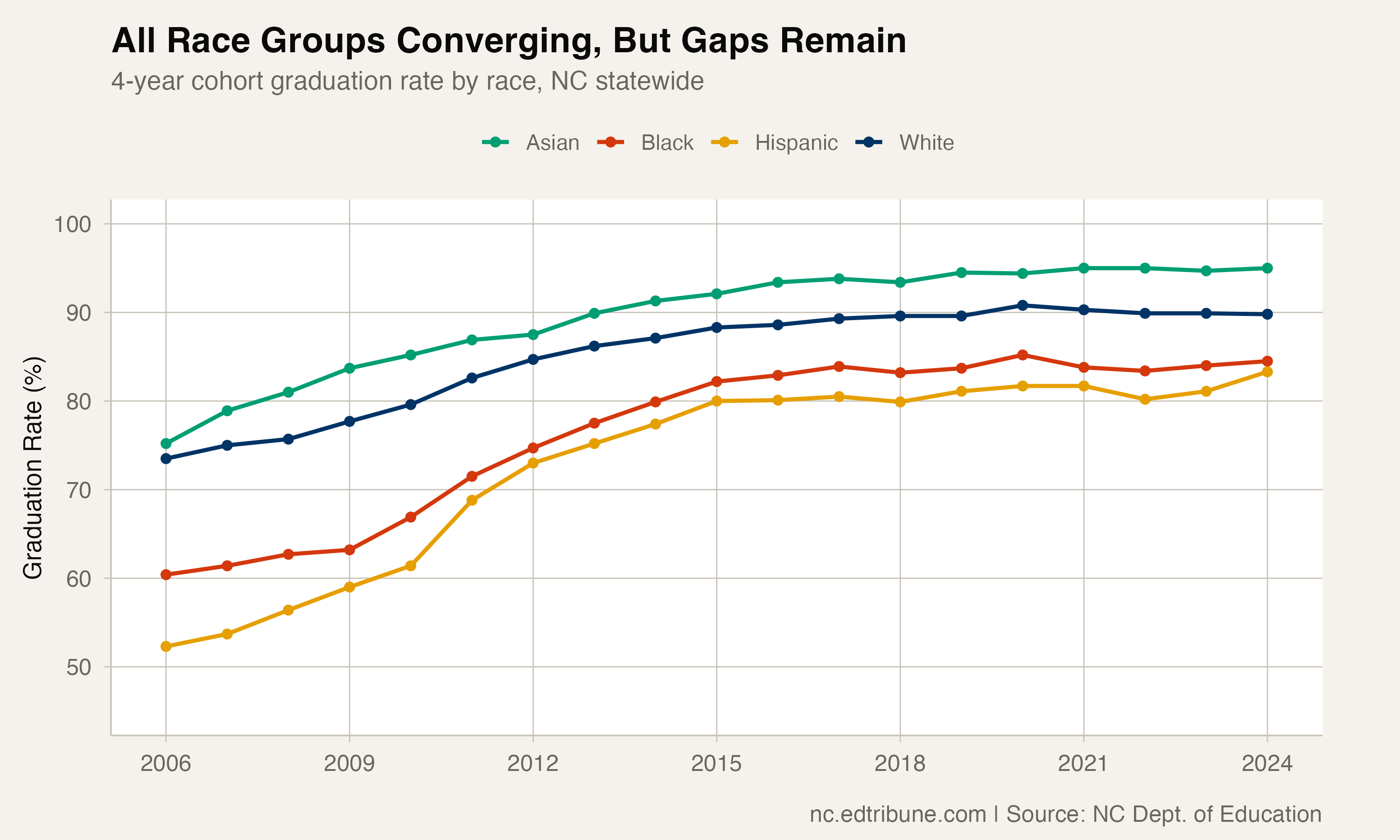
Hispanic students in North Carolina have cut the white-Hispanic graduation gap from 21 points to 6.5 while their cohort grew nearly fivefold. A 2024 breakout may signal the end of a 7-year plateau.
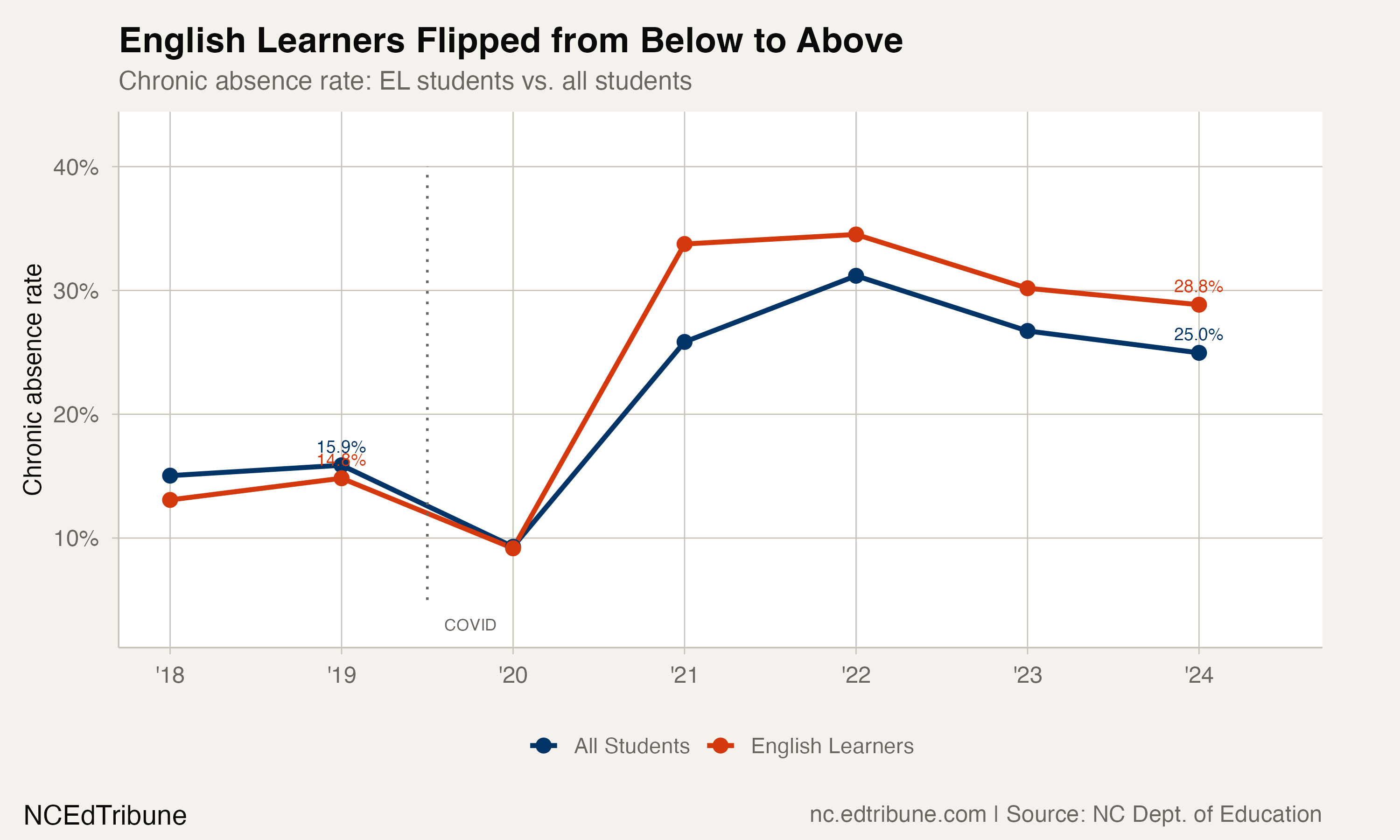
English learners in North Carolina had lower chronic absence than the state average before COVID. Now they are 3.9 points above it, a complete reversal.