Correction (April 22, 2026, updated June 4, 2026): This article's figures are statewide and were not affected by the district-level data processing error corrected elsewhere in this series. A separate review found the pre-COVID special education chronic count was understated; it has been corrected to approximately 43,600 (2018-19), which puts the increase since the pandemic at roughly 24,000 students.
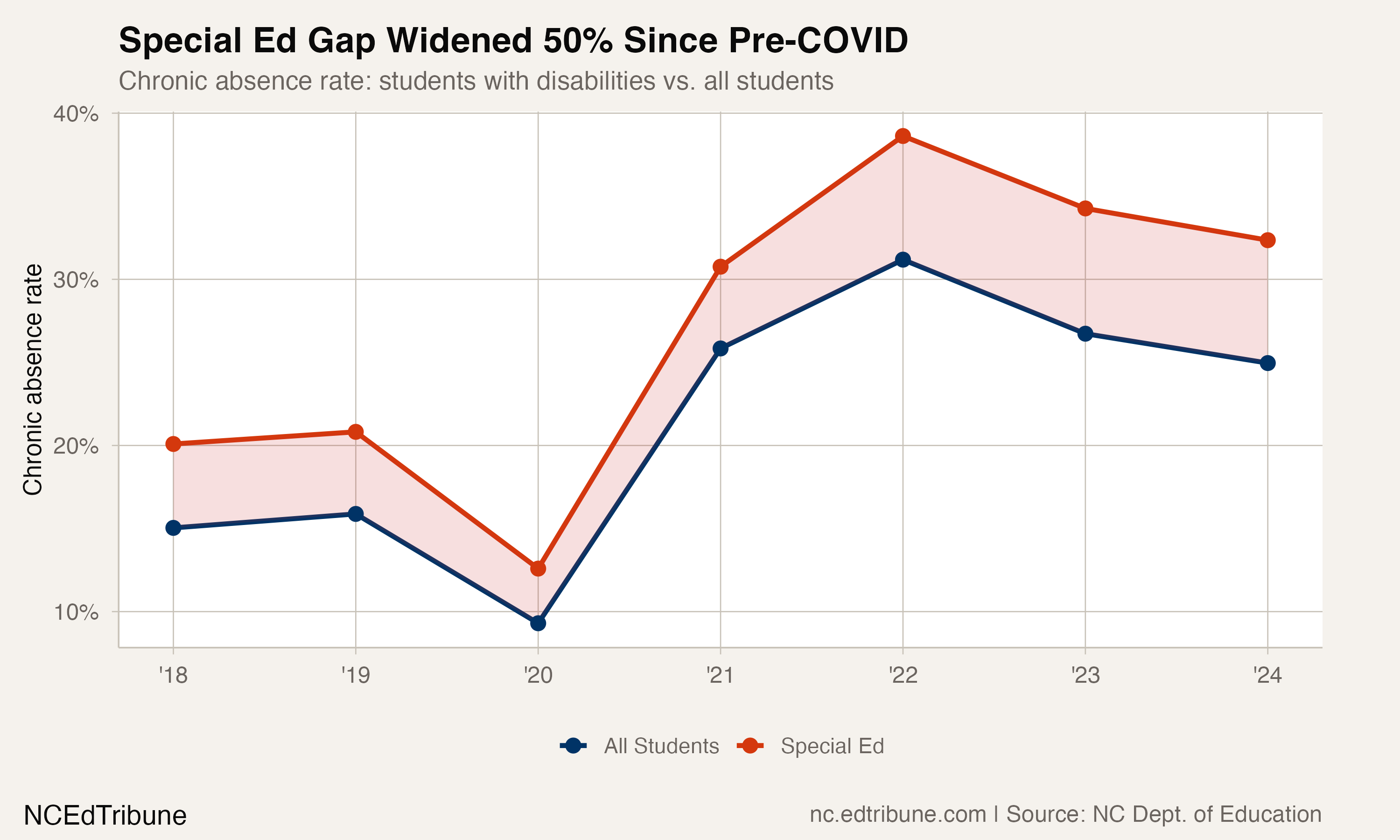
Before the pandemic, students with disabilities in North Carolina had a chronic absenteeism rate of 20.8%, roughly 5 points above the 15.9% overall average. The gap was concerning but stable. By 2023-24, the special education chronic rate had climbed to 32.4%, and the gap had widened to 7.4 percentage points, a 50% increase that has proven resistant to the recovery that brought the overall rate down.
One in three students with disabilities is now chronically absent, and 68,025 special education students missed at least 18 days in 2023-24. For students whose Individualized Education Programs depend on consistent in-person instruction, the compounding effects of missed days are more severe than for the general population.
A gap that widened, then stuck
The shaded region between the two trend lines reveals the dynamic. Before COVID, the gap held steady around 5 points: special education students were always above average, but by a consistent and manageable margin. The pandemic spiked both rates, but special education students spiked higher, hitting 38.6% in 2022 compared to 31.2% overall.
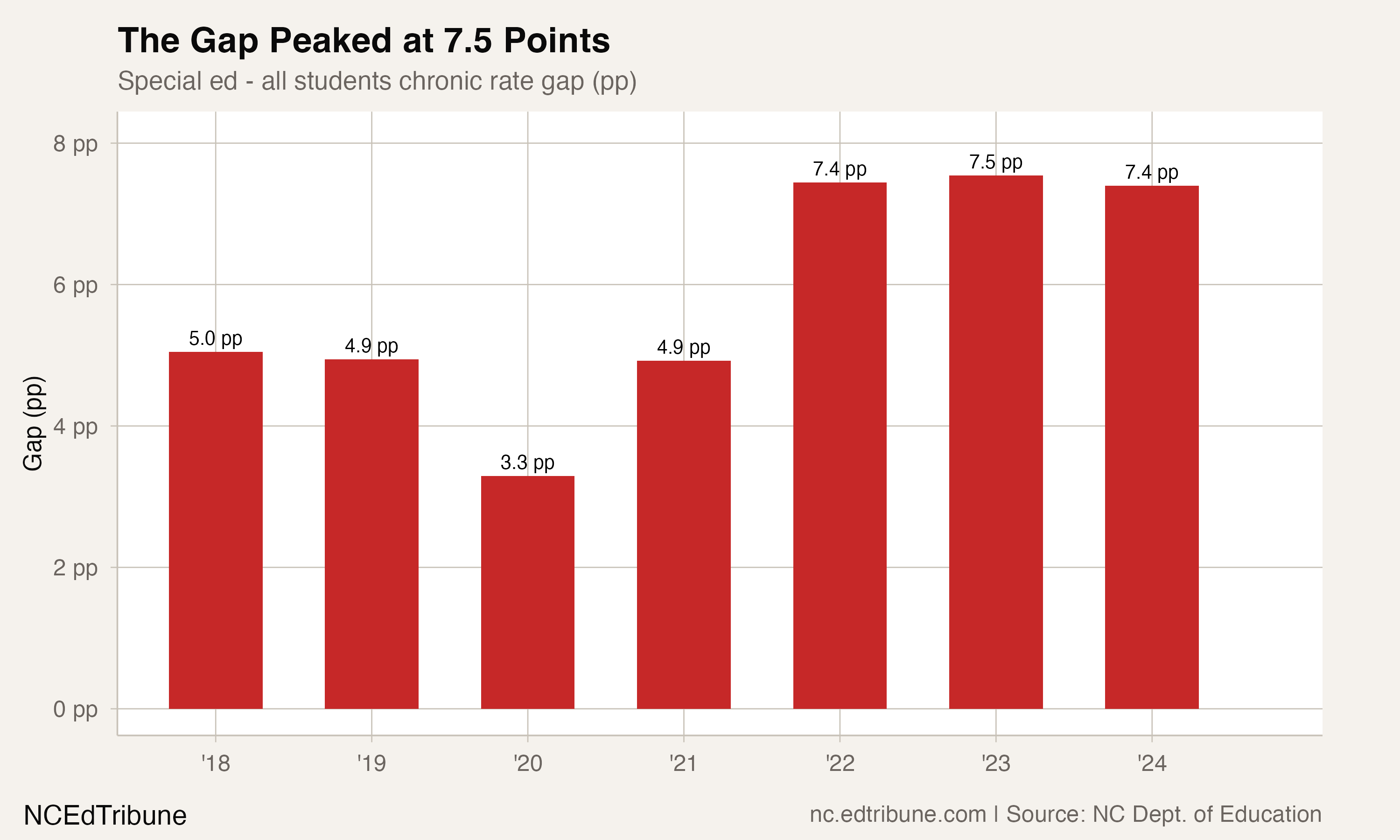
During recovery, the gap did not close back. It actually peaked at 7.5 points in 2022-23 before settling at 7.4 in 2023-24. The overall rate dropped 6.2 points from peak while special education dropped 6.3 points, nearly identical improvement in absolute terms. But the gap calculus is unforgiving: when both groups improve at the same pace, the gap does not shrink. The gap only shrinks when special education students improve faster, and that has not happened.
68,025 students behind the number
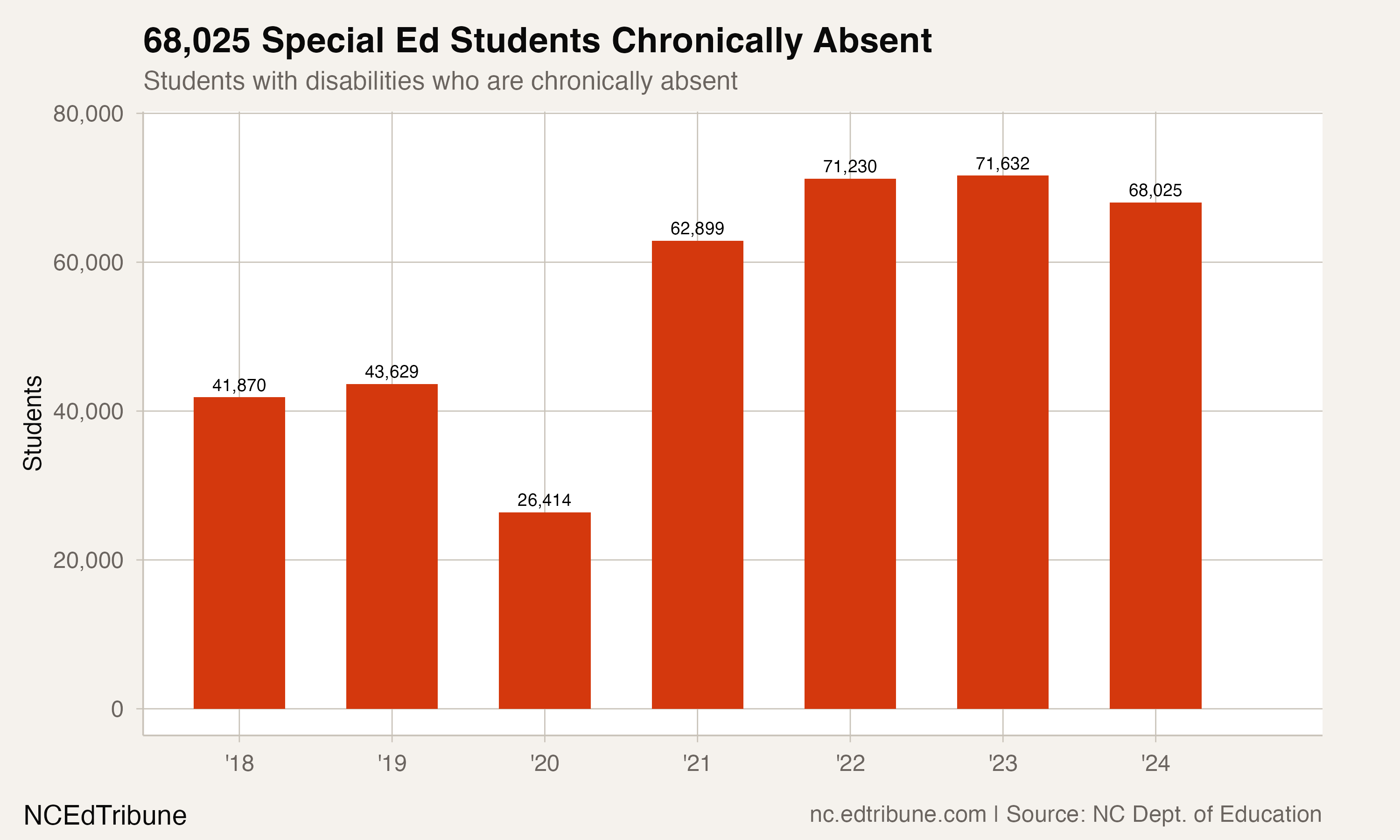
The 68,025 chronically absent special education students represent 32.4% of the state's 210,241 students with disabilities. Before COVID, the number was approximately 43,600. The increase of roughly 24,000 students means that North Carolina's special education system is trying to serve a population whose physical presence in classrooms has become dramatically less reliable.
The consequences ripple through IEP implementation. Speech therapy sessions are missed. Occupational therapy progress stalls. Behavioral intervention plans lose their consistency. Each missed day for a student with a disability is not just a missed day of instruction. It is a missed day of services that were specifically designed and legally required for that student.
Most attendance interventions -- robocalls, incentive programs, awareness campaigns -- are designed for the general population. Students with disabilities face different barriers: medical appointments that cannot be rescheduled, health conditions that mean more frequent illness, specialized bus routes that add an hour to a commute, and behavioral health needs that can make the school building itself a source of anxiety. The gap is stuck at 7.4 points because the tools being deployed were not built for this population.
Detailed code that reproduces the analysis and figures in this article is available exclusively to EdTribune subscribers.
Discussion
Sign in to join the discussion.
Loading comments...